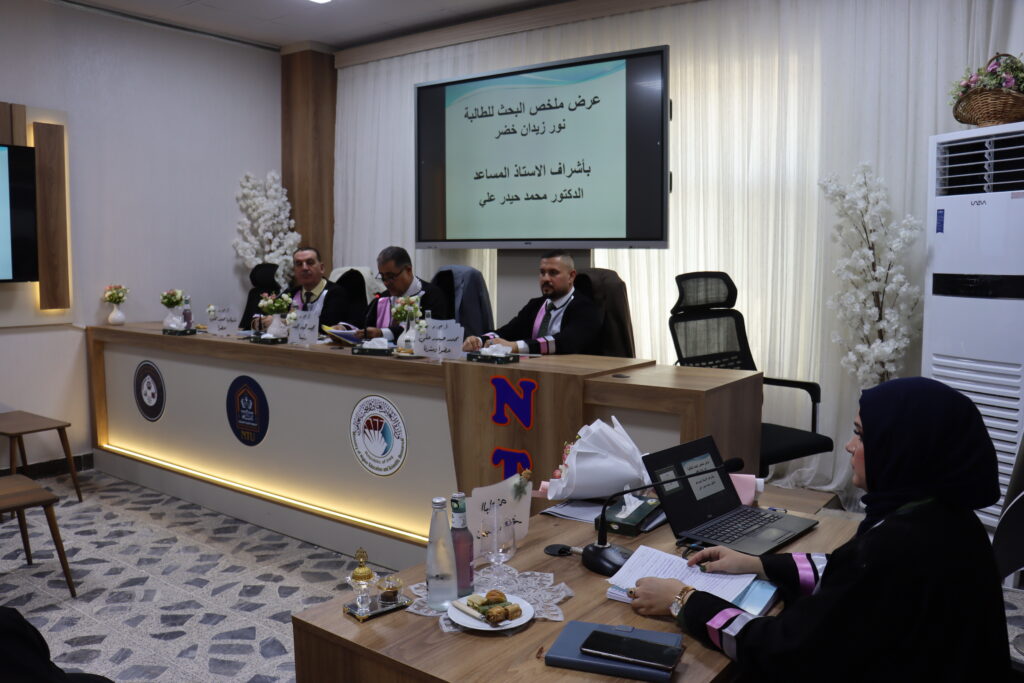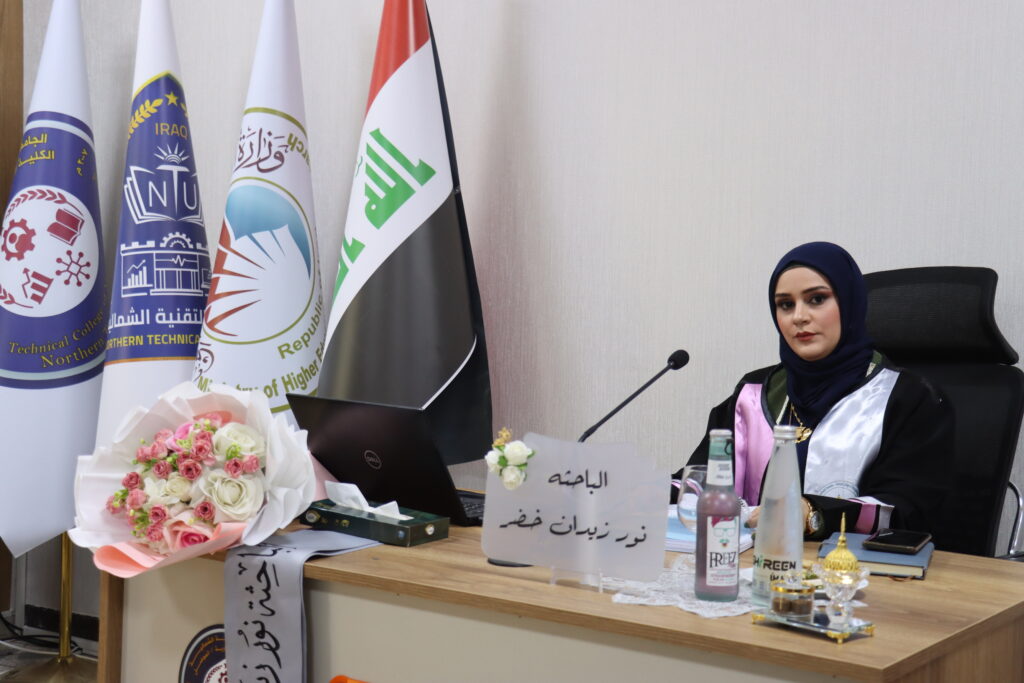
A higher technical diploma research project in Business Administration Technologies was discussed at the Administrative Technical College / Mosul, Northern Technical University, by the student Noor Zaidan Khudr. The research was entitled:
“Strategic Intent and Its Role in Enhancing Organizational Intelligence: An Analytical Study at the University of Mosul.”
The discussion was held at noon on Monday, August 31, 2026, in Al-Hikma Hall at the college.
The research aimed to identify the role of strategic intent in enhancing organizational intelligence at the University of Mosul. Strategic intent was examined through the dimensions of shared vision, resource concentration, and foresight, while organizational intelligence was addressed through the dimensions of strategic vision, shared fate, desire for change, sense of belonging, alignment and congruence, and knowledge deployment.
The research adopted a descriptive-analytical approach, with the University of Mosul serving as the field of application. The research population consisted of administrative leaders working at the university presidency, colleges, and other university formations, from which a sample of 90 administrative leaders was selected.
A questionnaire was used as the primary instrument for data collection and consisted of 45 items based on a five-point Likert scale. The collected data were analyzed using SPSS 26 and SmartPLS 3.
The findings revealed a statistically significant positive correlation between strategic intent and organizational intelligence, as well as a significant effect of the dimensions of strategic intent on enhancing organizational intelligence. The results indicated that a clear shared vision, effective allocation and direction of resources, and attention to future foresight represent key factors in strengthening the university’s ability to exchange knowledge, respond to change, and promote organizational belonging and alignment.
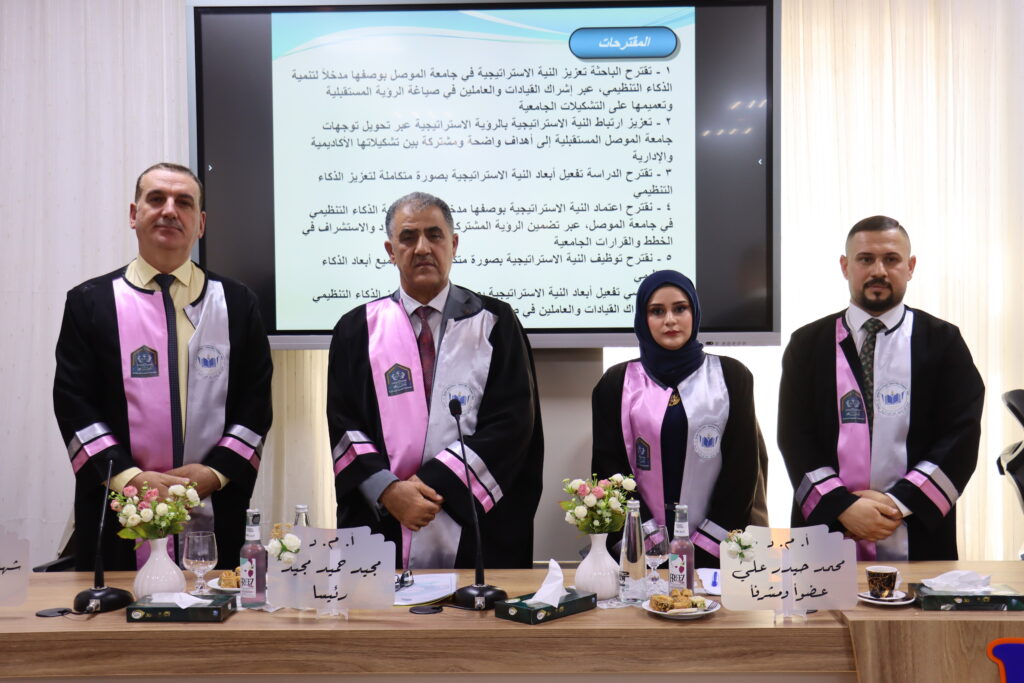
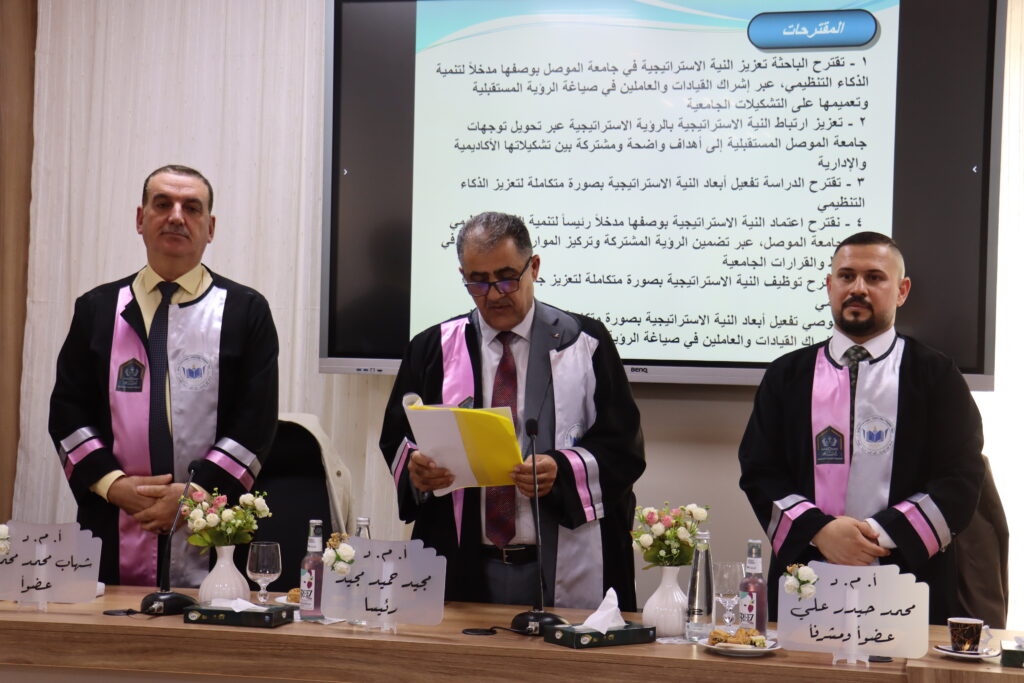
The research recommended integrating strategic intent practices into planning, decision-making, and resource allocation processes, thereby contributing to building a more intelligent university that is better able to learn, adapt, and achieve its future objectives.
The examination committee consisted of:
- Asst. Prof. Dr. Majeed Hameed Majeed – Chairman.
- Asst. Prof. Dr. Shihab Mohammed Mahmoud – Member.
- Asst. Prof. Dr. Mohammed Haider Ali – Member and Supervisor.