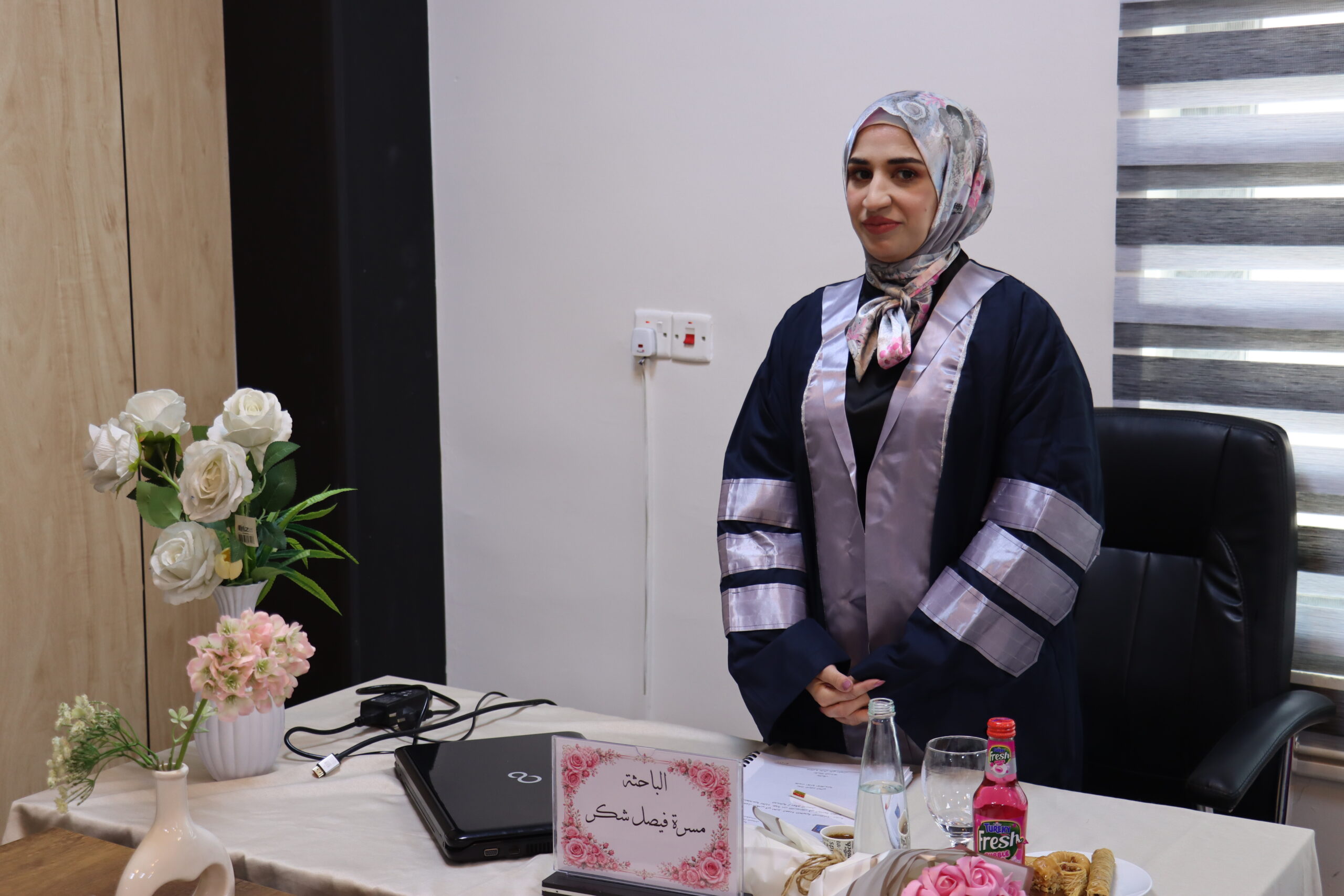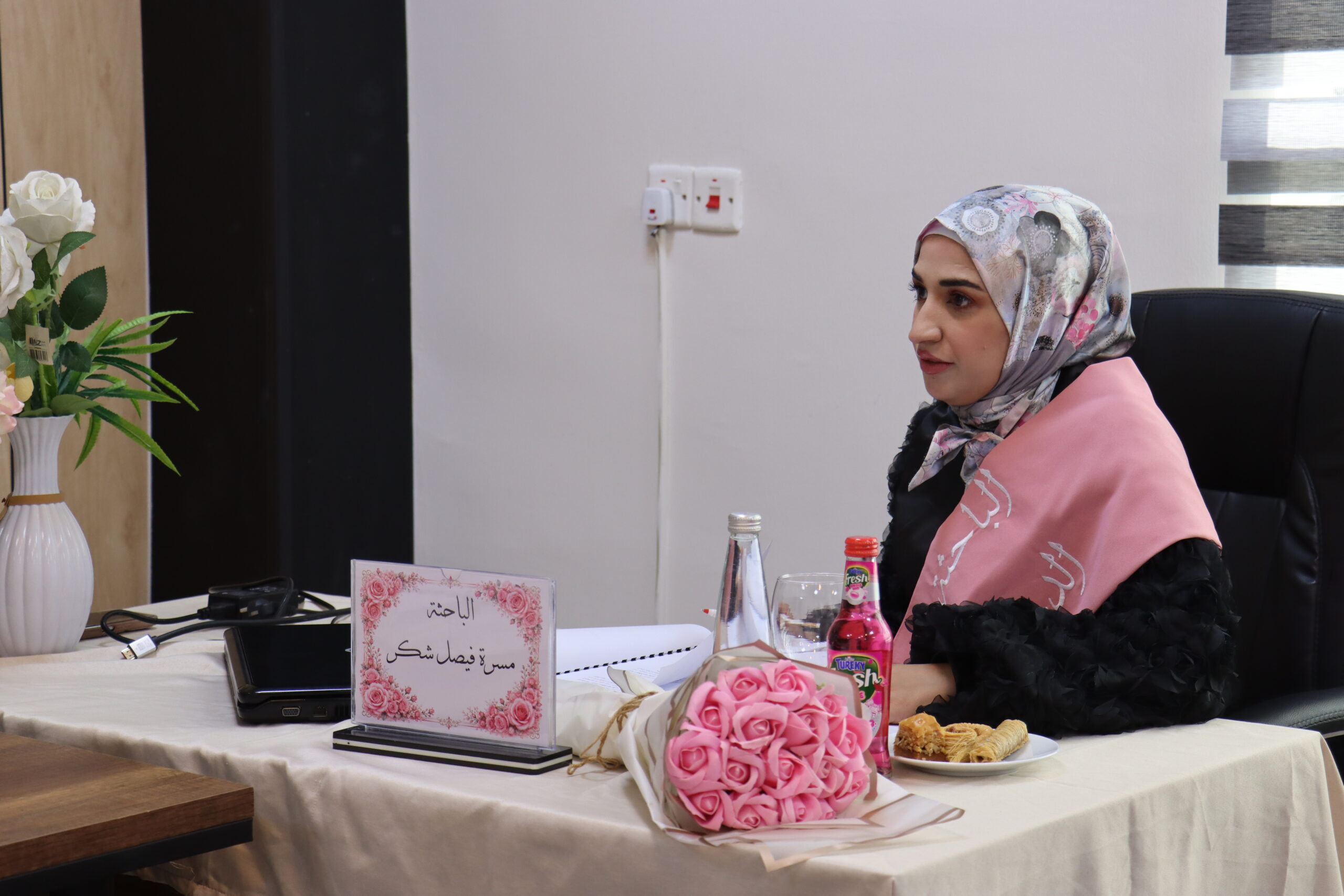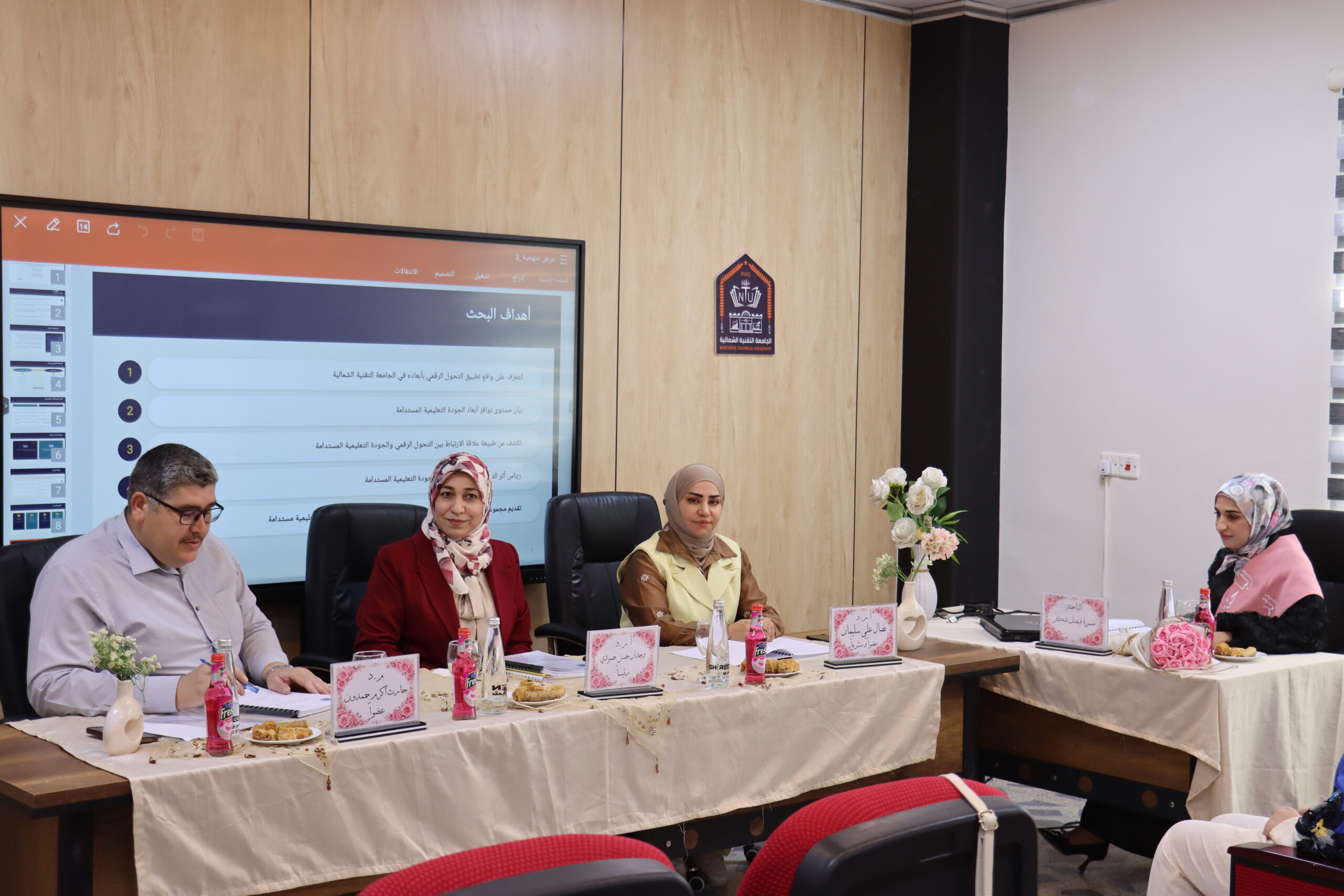
A higher technical diploma research project in Electronic Management Technologies was discussed at the Administrative Technical College / Mosul, Northern Technical University, by the student Masarra Faisal Shukr. The research was entitled:
“The Impact of Digital Transformation on Enhancing Sustainable Educational Quality: An Exploratory Study of the Opinions of a Sample of Faculty Members at Northern Technical University / Mosul Campus.”
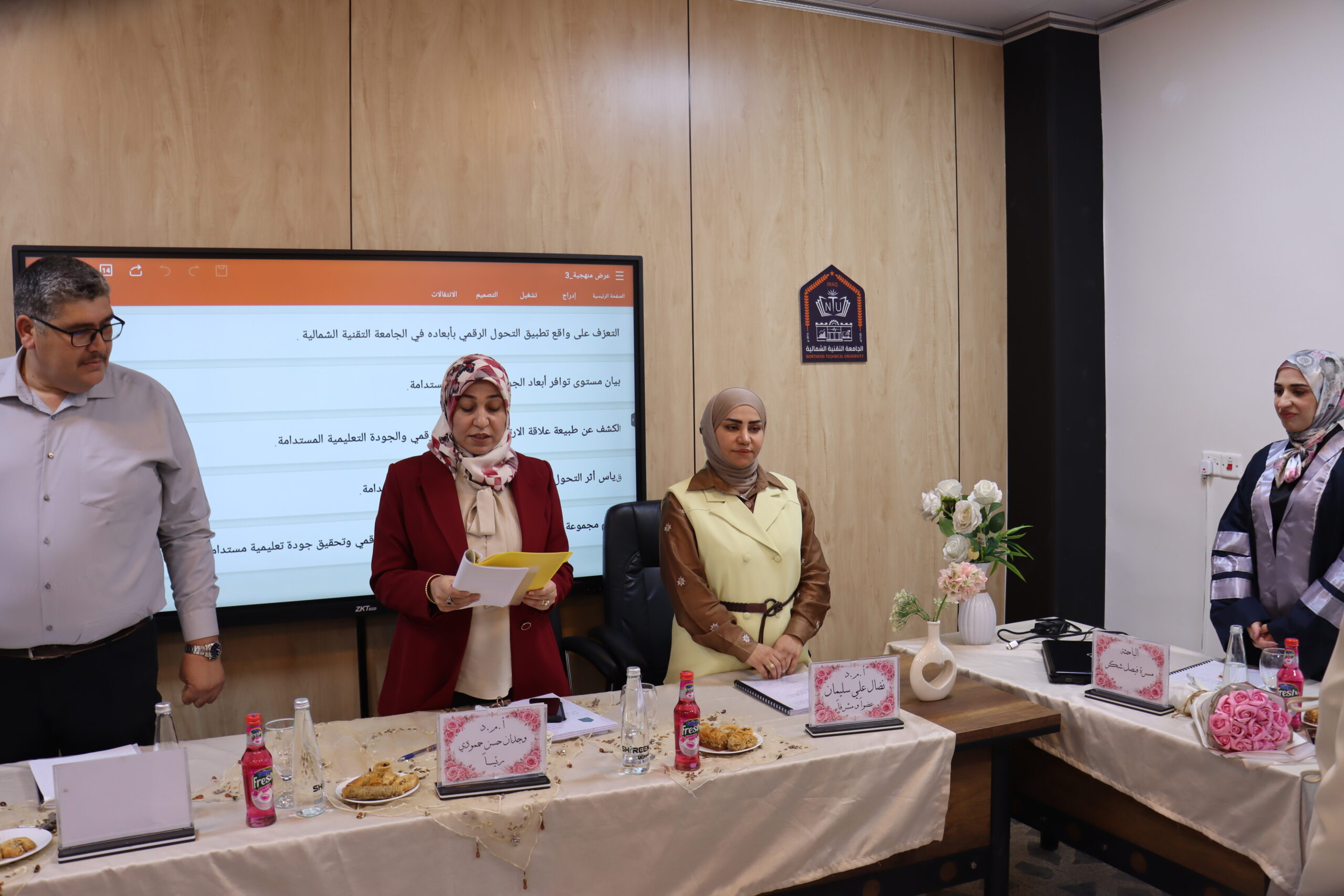
The discussion was held on Sunday morning, August 30, 2026, at 9:00 a.m. in Dr. Alyaa Hall at the Polytechnic College / Nineveh.
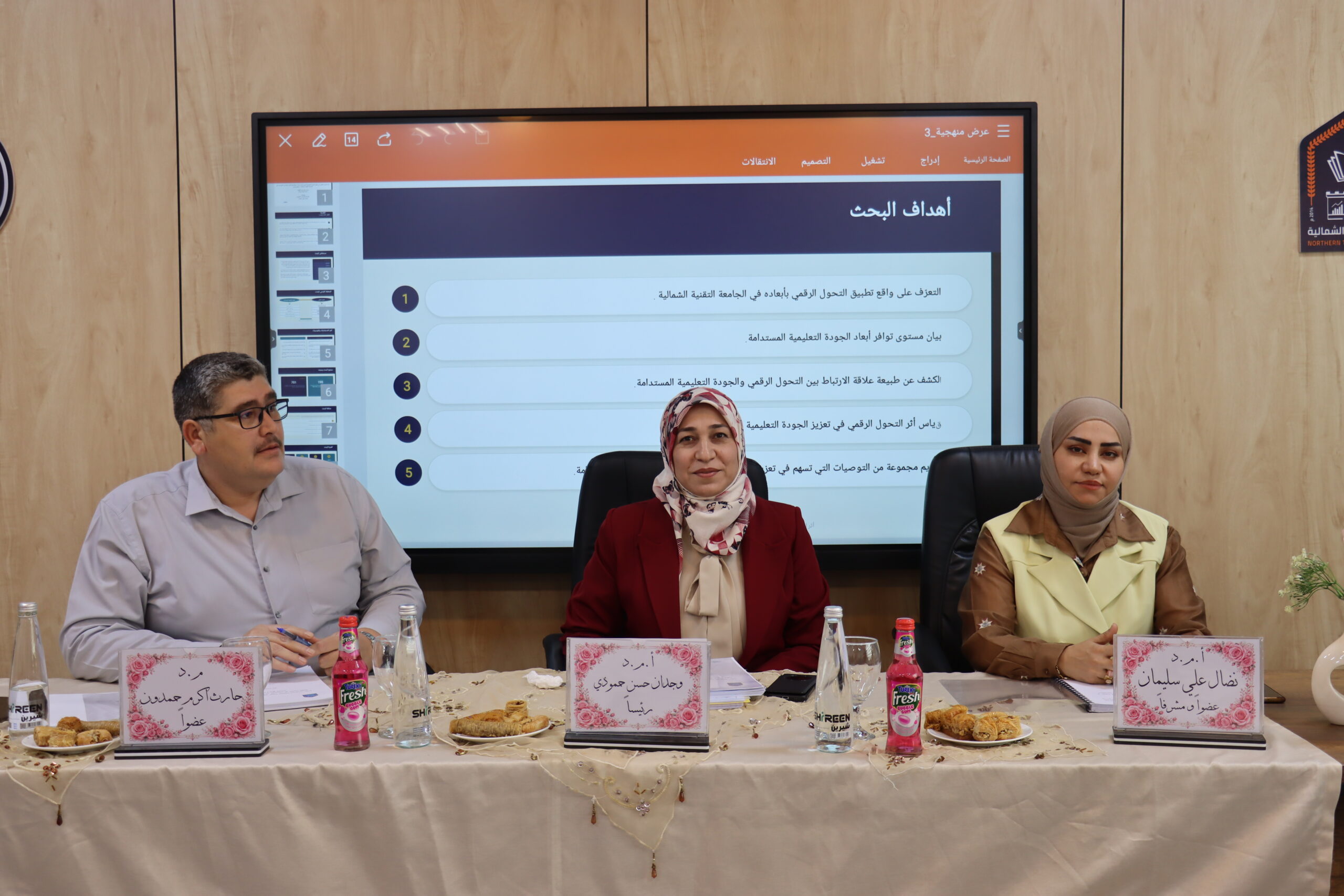
The research aimed to investigate the impact of digital transformation on enhancing sustainable educational quality in educational institutions by examining the effects of the dimensions of digital transformation, represented by digital infrastructure, digital leadership, digital competencies, digital educational technologies, and digital culture, on the dimensions of sustainable educational quality, represented by teaching and learning quality, scientific research quality, faculty satisfaction, continuous improvement and innovation, and institutional educational sustainability.
The research adopted a descriptive-analytical approach and used a questionnaire as the main instrument for data collection. The study sample consisted of 195 faculty members from the formations of Northern Technical University / Mosul Campus, selected from a total research population of 701 faculty members. The collected data were analyzed using SPSS and a range of statistical methods, including frequencies, percentages, arithmetic means, standard deviations, Pearson’s correlation coefficient, and regression analysis.
The results revealed a statistically significant positive correlation and impact between digital transformation and sustainable educational quality. The dimensions of digital transformation contributed to improving the quality of teaching and learning, enhancing the quality of scientific research, increasing faculty members’ satisfaction, supporting continuous improvement and innovation, and strengthening institutional educational sustainability.
The research recommended the development of digital infrastructure, improvement of digital competencies, strengthening of digital leadership, expanding the use of modern educational technologies, and fostering a digital culture in a manner that contributes to achieving sustainable educational quality and improving the overall performance of educational institutions.
The examination committee consisted of:
- Asst. Prof. Dr. Wijdan Hassan Hammoudi – Chairman.
- Lect. Dr. Harith Akram Hamdoun – Member.
- Asst. Prof. Dr. Nidal Ali Suleiman – Member and Supervisor.